The September 2026 FINTRAC penalties against gaming corporations in New Brunswick and Nova Scotia are a timely reminder that AML compliance remains a major issue for Canada’s gambling industry.

Canada’s casino industry is facing renewed scrutiny over anti-money laundering (AML) compliance after the country’s financial intelligence regulator announced penalties against gaming corporations in New Brunswick and Nova Scotia.
On September 3, 2026, the Financial Transactions and Reports Analysis Centre of Canada (FINTRAC) announced an administrative monetary penalty of C$399,712.50 against the New Brunswick Lotteries and Gaming Corporation and a C$231,826 penalty against the Nova Scotia Gaming Corporation. Both organizations have paid their penalties in full and the cases are closed.
The announcements highlight why AML controls, player verification and suspicious transaction reporting remain important parts of the Canadian gambling industry.
For players comparing top online casinos, top rated online casinos and other Canadian gambling sites, the developments also provide a useful reminder: a casino’s safety should be evaluated on more than bonuses, games and withdrawal speed.
What Happened in September 2026?
FINTRAC, Canada’s financial intelligence unit and AML/anti-terrorist financing supervisor, announced the two penalties on September 3.
The New Brunswick Lotteries and Gaming Corporation was fined C$399,712.50 following a compliance examination. FINTRAC found that the organization failed to submit three suspicious transaction reports when there were reasonable grounds to suspect that transactions were connected to money laundering or terrorist financing offences.
Nova Scotia Gaming Corporation received a C$231,826 penalty after FINTRAC identified three violations during its compliance examination. These included failures involving suspicious transaction reporting, written compliance policies and procedures, and enterprise-level risk assessment.
The penalties are administrative enforcement actions under Canada’s AML framework. They should not be interpreted as a finding that the gaming corporations themselves engaged in money laundering.
New Brunswick Gaming Corporation Fined C$399,712.50
FINTRAC said the New Brunswick Lotteries and Gaming Corporation failed to submit three suspicious transaction reports where there were reasonable grounds to suspect that transactions were related to money laundering or terrorist activity financing.
The examination identified several warning indicators across the transactions.
These included:
- Multiple players using common identifiers such as addresses or telephone numbers
- A common credit card being used by multiple online players
- Accounts linked to seemingly unrelated parties
- Information or identification that appeared false, altered or inaccurate
- Financial connections with people who had previously raised suspicion
- Excessive deposits using prepaid cards
- Chargebacks involving a player’s deposit payment instrument
FINTRAC classified the violation as Very Serious under the applicable regulations.
The full C$399,712.50 penalty has been paid and the case is closed.
Nova Scotia Gaming Corporation Fined C$231,826
Nova Scotia Gaming Corporation faced three separate violations.
The first involved failure to submit two suspicious transaction reports where there were reasonable grounds to suspect that attempted transactions were connected to money laundering or terrorist financing.
FINTRAC identified indicators including:
- Common identifiers being used by multiple players
- Questions surrounding player identity
- Suspected false, stolen or altered identification
- Misleading information
- Chargebacks associated with player deposits
FINTRAC classified this violation as Very Serious.
The second violation involved incomplete written AML compliance policies and procedures.
The third involved failing to complete and document an enterprise-level assessment of money laundering and terrorist financing risks as required by Canadian legislation and regulations.
Nova Scotia Gaming has also paid its penalty in full, and FINTRAC considers the case closed.
Does This Mean Canadian Casinos Are Unsafe?
No.
The FINTRAC penalties concern specific compliance failures identified during regulatory examinations.
They do not mean that Canadian casinos generally are unsafe or that players’ funds are automatically at risk.
In fact, regulatory enforcement is one of the mechanisms used to hold reporting entities accountable when they fail to meet their legal obligations.
FINTRAC states that its AML and anti-terrorist financing regime is designed to help protect Canadians, the Canadian financial system and the integrity of legitimate businesses.
For players, the important takeaway is that regulation and compliance matter when choosing an online casino.
Why AML Rules Matter for Online Casinos
Online casinos handle large volumes of financial transactions.
A player may deposit using:
- Credit or debit cards
- Online banking
- Interac
- E-wallets
- Other supported payment methods
Operators therefore need systems that can identify unusual transaction patterns and investigate activity that could indicate financial crime.
Canadian casinos subject to the federal AML framework have obligations involving customer identification, record keeping, compliance programs and reporting certain transactions to FINTRAC.
What Is KYC at an Online Casino?
KYC stands for Know Your Customer.
It refers to procedures used by gambling operators to verify a player’s identity.
A casino may request information such as:
- Full name
- Date of birth
- Residential address
- Government-issued identification
- Proof of address
- Payment-method verification
The exact verification process varies between operators and jurisdictions.
KYC can sometimes feel inconvenient, particularly when a withdrawal is placed on hold pending verification. However, identity verification is an important component of a regulated gambling environment.
Why Casinos Ask for Identification Before Withdrawal
Players sometimes wonder why a casino requests additional documentation after a deposit has already been accepted.
There are several possible reasons.
An operator may need to:
- Confirm the account belongs to the registered player.
- Verify the player’s identity.
- Confirm payment-method ownership.
- Meet regulatory obligations.
- Investigate unusual account activity.
- Prevent fraud or unauthorized transactions.
A legitimate casino should explain its verification requirements in its terms and conditions.
What Makes a Safe Online Casino?
Safety should be one of the first factors considered when comparing casino websites.
At TopRatedCasinos.co, a casino evaluation should consider factors such as:
Licensing
Check whether the operator is authorized to offer gambling services in the relevant province or jurisdiction.
Player Verification
Look for clear information about KYC and identity verification.
Payment Security
Review available payment methods, transaction security and withdrawal procedures.
Responsible Gambling
Look for tools such as deposit limits, time limits, cooling-off periods and self-exclusion.
Transparent Terms
Casino bonuses should clearly explain wagering requirements, eligibility, expiry dates and withdrawal restrictions.
Complaint and Support Processes
Players should be able to contact customer support and understand how complaints are handled.
Are Top Online Casinos Safer?
The phrase top online casinos should not simply mean casinos offering the biggest bonuses.
A casino that wants to be considered among the leading operators should also demonstrate strong standards around:
- Licensing
- Security
- KYC
- AML compliance
- Payments
- Responsible gambling
- Customer support
- Transparent terms
This is particularly important when comparing casino brands across different Canadian provinces.
How We Evaluate Top Rated Online Casinos
When ranking top rated online casinos, safety should be a core part of the assessment.
A useful evaluation framework can include:
Licensing & Regulation — 25%
Is the casino authorized to operate in the applicable market?
Security & Player Protection — 20%
Does the operator provide appropriate account security, verification and responsible gambling measures?
Games — 15%
Does the casino offer a broad selection from established game providers?
Payments — 15%
Are deposits and withdrawals clearly explained and reasonably accessible?
Bonuses — 10%
Are promotional terms transparent and fair?
Mobile Experience — 10%
Can players use the casino smoothly on modern mobile devices?
Customer Support — 5%
Is help accessible when players need it?
This type of methodology helps distinguish genuine top rated casinos from websites ranked purely because they offer aggressive promotions.
What About Top Bitcoin Casinos?
The AML developments are also relevant when players research top Bitcoin casinos and other cryptocurrency gambling websites.
Crypto casinos can involve additional considerations because cryptocurrency transactions operate differently from conventional banking transactions.
Players should investigate:
- Where the operator is licensed
- Which jurisdiction regulates the casino
- Whether KYC is required
- How withdrawals work
- Whether the casino accepts Canadian players
- What responsible gambling controls are available
- Whether the operator provides clear ownership and contact information
Importantly, a casino accepting Bitcoin is not automatically regulated or safer than a traditional casino.
Players should never assume that cryptocurrency payments provide anonymity or remove regulatory obligations.
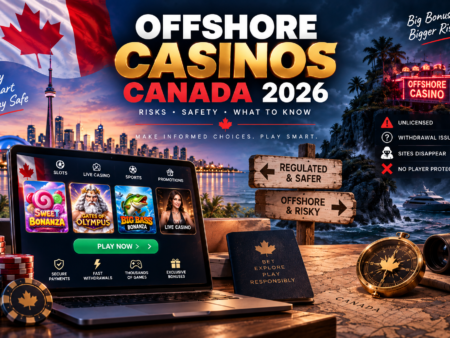
Regulated vs Offshore Casinos
One of the most important distinctions for Canadian players is between regulated operators and offshore gambling websites.
A regulated casino operates within a recognized regulatory framework applicable to the player’s jurisdiction.
An offshore operator may be licensed somewhere else but not authorized within the Canadian province where the player resides.
Before registering, players should check:
- Where the casino is licensed.
- Which regulator issued the license.
- Whether the operator is authorized to serve players in their province.
- What dispute-resolution mechanisms are available.
- What responsible gambling protections are offered.
A foreign license should not automatically be treated as equivalent to provincial authorization in Canada.
What Does the Latest FINTRAC Action Mean for Players?
The September enforcement actions reinforce a simple point:
Casino safety is about more than winning and withdrawing money.
Behind the scenes, operators are expected to maintain systems designed to identify suspicious activity and comply with Canada’s financial crime legislation.
For players, this means that requests for identity verification, payment verification or additional documentation are not necessarily warning signs.
What matters is whether the operator communicates clearly and handles information appropriately.
Canada’s AML Enforcement Is Becoming More Active
The latest penalties also come within a broader period of increased FINTRAC enforcement.
According to FINTRAC, during 2025–26 it issued 35 Notices of Violation, the largest number in a single year in the Centre’s history, representing more than C$247 million in penalties across businesses subject to the AML framework.
FINTRAC also reported that its financial intelligence activity generated 7,214 financial intelligence disclosure packages based on 3,007 unique disclosures during the year.
The figures demonstrate that AML compliance is receiving significant attention across Canada’s regulated financial and gaming environment.
What Should Players Look for Before Joining a Casino?
Before depositing money, players should ask:
Is the casino regulated?
Check the applicable provincial regulator or official gaming directory.
Does it explain KYC?
A legitimate operator should provide information about identity verification.
Are withdrawal rules clear?
Read the withdrawal terms before making a deposit.
Are bonus conditions transparent?
Never judge a promotion by its headline value alone.
Are responsible gambling tools available?
Look for deposit limits, time limits and self-exclusion options.
Can customer support be contacted?
Test the available support channels before depositing if you have concerns.
Red Flags to Watch For
Players should be cautious if a casino:
- Makes unrealistic guaranteed-win claims
- Hides important bonus conditions
- Has unclear ownership
- Does not clearly identify its regulator
- Provides vague withdrawal rules
- Requests unusual payment arrangements
- Makes it difficult to contact support
- Pressures players to deposit more
- Has unexplained account restrictions
No casino should be treated as risk-free.
What This Means for Top Rated Casinos in Canada
The September FINTRAC announcements provide an important lesson for casino comparison websites.
The top rated casinos should not be ranked solely on:
- Bonuses
- Number of games
- Jackpot size
- Advertising
- Brand popularity
Regulatory compliance, player protection and transparent financial practices should carry significant weight.
This is particularly important as Canada’s online gambling market continues to develop and new operators enter regulated provincial markets.
Frequently Asked Questions
What casino companies were fined in September 2026?
FINTRAC announced penalties against the New Brunswick Lotteries and Gaming Corporation and Nova Scotia Gaming Corporation on September 3, 2026.
How much were the fines?
New Brunswick Lotteries and Gaming Corporation was fined C$399,712.50, while Nova Scotia Gaming Corporation received a C$231,826 penalty. Both penalties have been paid in full.
Why were the casinos fined?
New Brunswick’s violation involved failures to submit suspicious transaction reports. Nova Scotia faced three violations involving suspicious transaction reporting, compliance policies and procedures, and risk assessment.
Does a casino AML fine mean players were laundering money?
No. The FINTRAC penalties were administrative enforcement actions against the gaming corporations for failures to meet their reporting and compliance obligations. They should not be interpreted as a finding that the gaming corporations themselves engaged in money laundering.
What is AML?
AML stands for Anti-Money Laundering. It refers to measures designed to prevent and detect the use of legitimate financial and business systems for money laundering.
What is KYC?
KYC means Know Your Customer. It refers to procedures used to verify a customer’s identity.
Are top online casinos safe?
No online casino should be described as completely risk-free. Players should check licensing, regulation, KYC procedures, payment security, responsible gambling tools and the operator’s reputation before depositing.
Are top Bitcoin casinos regulated in Canada?
Bitcoin acceptance does not automatically mean that a casino is regulated in Canada. Players should verify the operator’s licensing status and whether it is authorized to serve players in their province.
Final Verdict
The September 2026 FINTRAC penalties against gaming corporations in New Brunswick and Nova Scotia are a timely reminder that AML compliance remains a major issue for Canada’s gambling industry.
The C$399,712.50 New Brunswick penalty and C$231,826 Nova Scotia penalty followed findings involving suspicious transaction reporting and, in Nova Scotia’s case, additional compliance and risk-assessment failures.
For players, the key lesson is not to panic about online gambling. Instead, it is to become more selective.
When comparing top online casinos, top rated online casinos and top rated casinos, look beyond bonuses and game selection. Licensing, KYC, financial security, responsible gambling and transparent terms should all be part of the decision.
And when considering top Bitcoin casinos, remember that cryptocurrency support alone does not establish that an operator is regulated or safe for Canadian players.
A reputable casino should make its regulatory status, player-protection measures and financial terms clear.
Gambling involves risk. Players should follow the rules applicable in their province, set personal limits and never gamble more than they can afford to lose.